















What Are Geomagnetic Storms and How Do They Affect Us?

In recent years, the topic of geomagnetic storms has increasingly attracted attention from both scientists and ordinary users. Many people ask questions: what is this phenomenon, does it affect health, and should it be feared. Let’s take a closer look.
What is a geomagnetic storm
A geomagnetic storm is a temporary but powerful disturbance of the Earth’s magnetic field. It occurs under the influence of streams of charged particles and energy coming from outer space.
When these particles reach the Earth, they interact with the planet’s magnetic field, causing its fluctuations. As a result, changes occur in the electromagnetic environment around the Earth.
Fresh news, tips, and insights every day!
Geomagnetic storms are a natural cosmic phenomenon that occurs regularly and is monitored by scientists around the world.
How geomagnetic storms form
The main cause of storms is solar energy bursts. Streams of solar wind reach the Earth and interact with its magnetosphere.
- Solar flares release charged particles
- Particles reach the Earth’s magnetic field
- A sudden change in the magnetic balance occurs
- Fluctuations of the magnetic field arise
Consequences of geomagnetic storms
Geomagnetic storms can affect both technology and natural processes. In most cases, these effects are short-term.
Impact on technology
- Disruptions in satellite communications
- Reduced GPS accuracy
- Voltage fluctuations in power grids
- Radio signal interruptions
Aviation, navigation systems, and energy infrastructure are especially sensitive to geomagnetic storms.
Natural effects
- Intensification of auroras
- Short-term changes in the Earth’s magnetic background
Do geomagnetic storms affect humans
This question remains a subject of discussion. To date, there is no clear scientific evidence that geomagnetic storms directly and seriously affect human health.
Most scientists agree that there is no direct harmful effect on the human body.
Possible indirect effects
Despite the lack of direct evidence, some people report changes in their well-being during storms:
- Sleep disturbances
- Headaches
- Increased fatigue
There may also be indirect effects, for example due to disruptions in technology or communication.
Are geomagnetic storms dangerous
In most cases, geomagnetic storms do not pose a direct threat to humans. However, strong storms can create risks for infrastructure.
Powerful geomagnetic storms can cause serious disruptions in power systems and communications.
What to do during a geomagnetic storm
- Check the operation of electronic devices
- Regularly back up your data
- Follow official warnings
- Stay calm and avoid panic
Interesting facts about geomagnetic storms that will surprise you
Geomagnetic storms are not only a scientific phenomenon but also a source of many fascinating facts. Some of them may seem incredible, but they are confirmed by research and observations.
The strongest storm in history could have shut down the modern world
In 1859, the so-called “Carrington Event” occurred — the strongest geomagnetic storm ever recorded.
At that time:
- Telegraph lines failed
- Operators received electric shocks
- The aurora was visible even in the tropics
If a similar storm occurs today, it could cause massive power outages and internet disruptions worldwide.
Auroras can be seen where they usually never appear
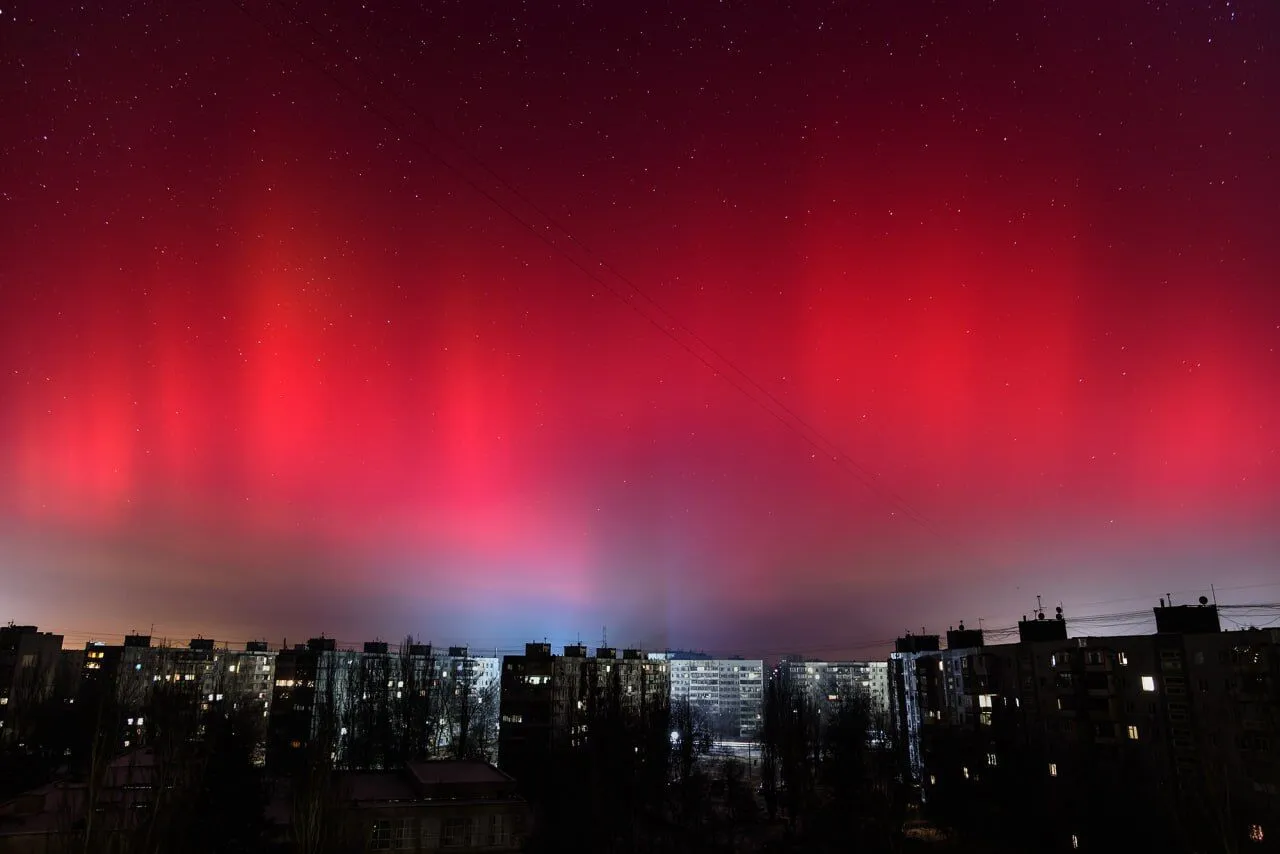
During strong storms, the aurora shifts far from the poles. Sometimes it can be observed in countries where it is usually impossible.
This is one of the few “beautiful bonuses” of geomagnetic storms.
Geomagnetic storms can affect animals
Some studies show that animals that rely on the Earth’s magnetic field may behave unusually during storms:
- Birds lose their migration route
- Whales and dolphins may lose orientation
- Pets become restless
Airplanes sometimes change routes
During strong geomagnetic storms, airlines may adjust flight routes, especially near the poles.
Reason:
- Risk of radio interference
- Increased cosmic radiation
This is done for passenger safety and stable communication with air traffic control.
Navigation systems and maps may “lie”
During storms, GPS systems can malfunction, resulting in:
- Reduced location accuracy
- Navigation errors
Astronauts are at risk
For people on Earth, storms are mostly safe, but in space the situation is different.
Astronauts may receive increased doses of radiation during strong solar flares.
Some people really feel storms
Despite the lack of conclusive evidence, many people report changes in their well-being:
- Headaches
- Weakness
- Blood pressure fluctuations
Scientists are still studying this connection, but it is not yet considered proven.
The Sun is currently in an active phase
Solar activity changes in cycles of about 11 years. During peak periods:
- The number of flares increases
- Geomagnetic storms occur more often
Interesting fact: even a weak geomagnetic storm can already affect satellites and communication, although a person may not notice it.
Geomagnetic storms can “ignite” power grids
During strong storms, induced currents can occur in power lines, leading to overloads.
In rare cases, this can cause power outages over large areas.
Brief answers to popular questions
What is it?
Temporary disturbances of the Earth’s magnetic field.Is it dangerous?
No, there is usually no direct threat to humans.Does it affect health?
There is no scientifically proven strong effect.What happens during a storm?
Magnetic field fluctuations occur and technical failures are possible.
📌 Want to stay updated on life in Turkey?
Subscribe to our Telegram channel and get fresh news, real estate insights, tips, and life hacks first!
🔔 Subscribe to LifeinTurkeyRestProperty


